
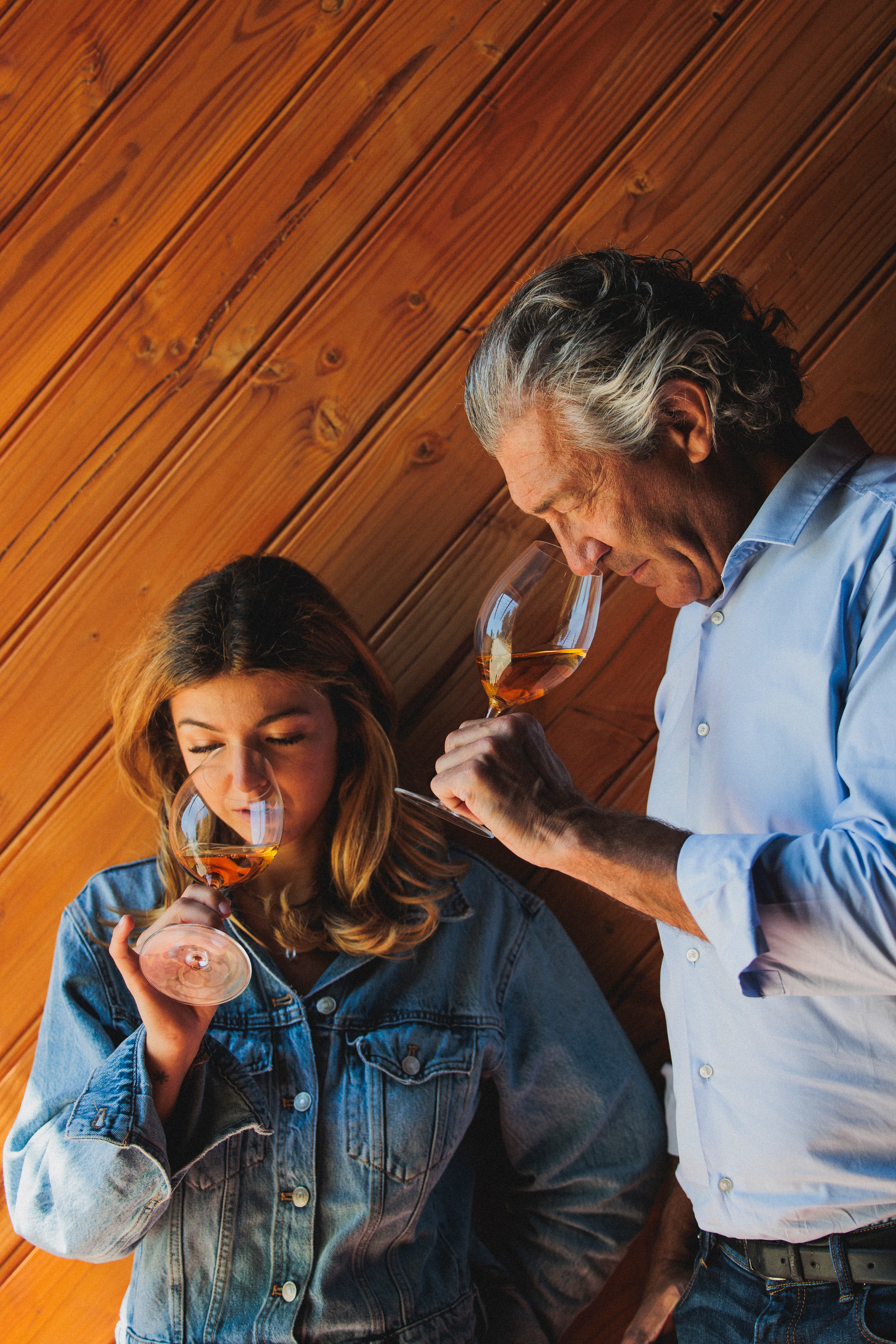
The Bertrand family

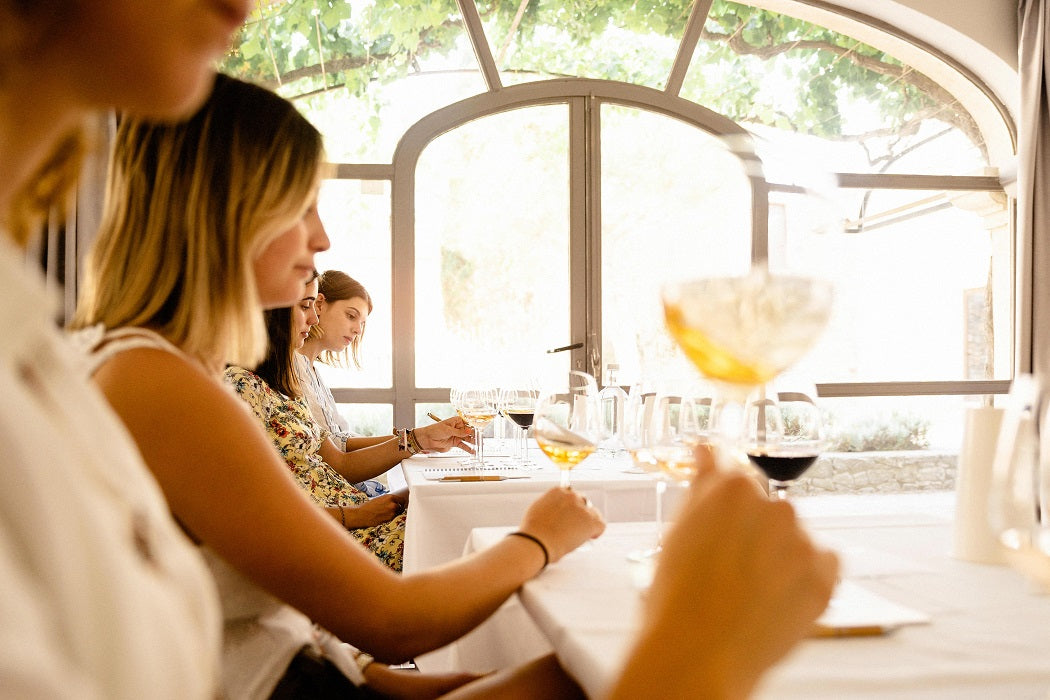
How to taste a wine?
Tasting a wine may seem daunting for beginners, but it can be an enriching and enjoyable experience with a few simple tips. It is a captivating journey through the rich and varied terroirs of the south of France, where each sip reveals subtle aromas and complex flavours. Here is a basic tasting guide for novices:
The Eye: The Art of Observation
Even before bringing the wine to your lips, take the time to observe its colour and its brilliance. Begin by pouring a small quantity of wine into a clear glass. Observe its colour, its clarity and its brilliance. Red wines can range from ruby to purple, while white wines can be golden, pale yellow or green. The intensity of the colour can reveal clues about the grape variety used and the winemaking process.
Hold the glass by the stem so as not to influence the temperature of the wine with the heat of your hand. Observe the colour of the wine by tilting the glass slightly against a white background.
The Art de Vivre White presents a pale yellow hue, evoking freshness and vivacity.
The Nose: Exploring the Aromas
The long-awaited moment of breathing in the delicate aromas of the wine. Gently swirl the liquid in your glass to release its captivating scents. Bring your nose to the glass and breathe gently. Try to identify the aromas emanating from the wine. You might detect notes of fruit, spices, flowers or even woody or mineral nuances.
The Art de Vivre White offers notes of tropical fruits such as pineapple and mango, as well as floral nuances and subtle hints of citrus.
The Palate: Discovering the Flavours
The actual tasting begins when the wine touches your lips. Note the texture of the wine (is it light, full-bodied, velvety?), its level of acidity (is it lively or soft on the palate?) and its dominant flavours. Try to describe what you feel, even if you are not sure of the terms to use.
Take a small sip and let it spread across your palate. The Art de Vivre White is characterised by a silky texture and a refreshing acidity that perfectly balances its aromatic richness.
On the palate, you will discover flavours of exotic fruits, supported by a subtle minerality that brings complexity and depth to this elegant wine.
The Finish: A Memorable Conclusion
The finish refers to the sensation that lingers on the palate after swallowing the wine. Does it leave a fresh and fruity sensation, or a warmer and more persistent impression? This can give you indications about the quality and complexity of the wine.
Remember that there is no right or wrong answer when it comes to wine tasting. Trust your own impressions and your palate.
The more you practise, the more you will develop your ability to identify aromas and flavours.


Leave a comment
This site is protected by hCaptcha and the hCaptcha Privacy Policy and Terms of Service apply.