
The Bertrand family
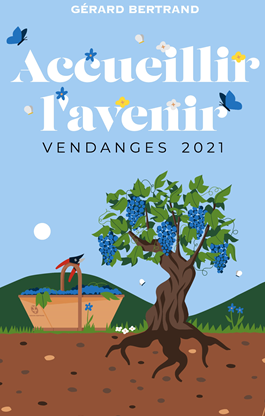
Welcoming the future at villemajou on a living soil
« Wine must taste of somewhere, not of something. » Gérard Bertrand crafts wines that taste of their terroir, on soils worked using biodynamics. A conviction that comes fully into effect during the harvest. Explanations at Villemajou.
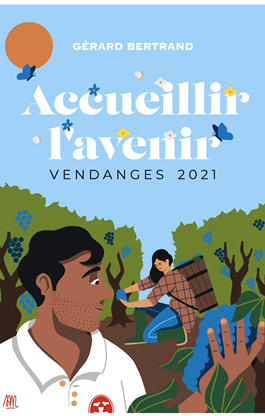
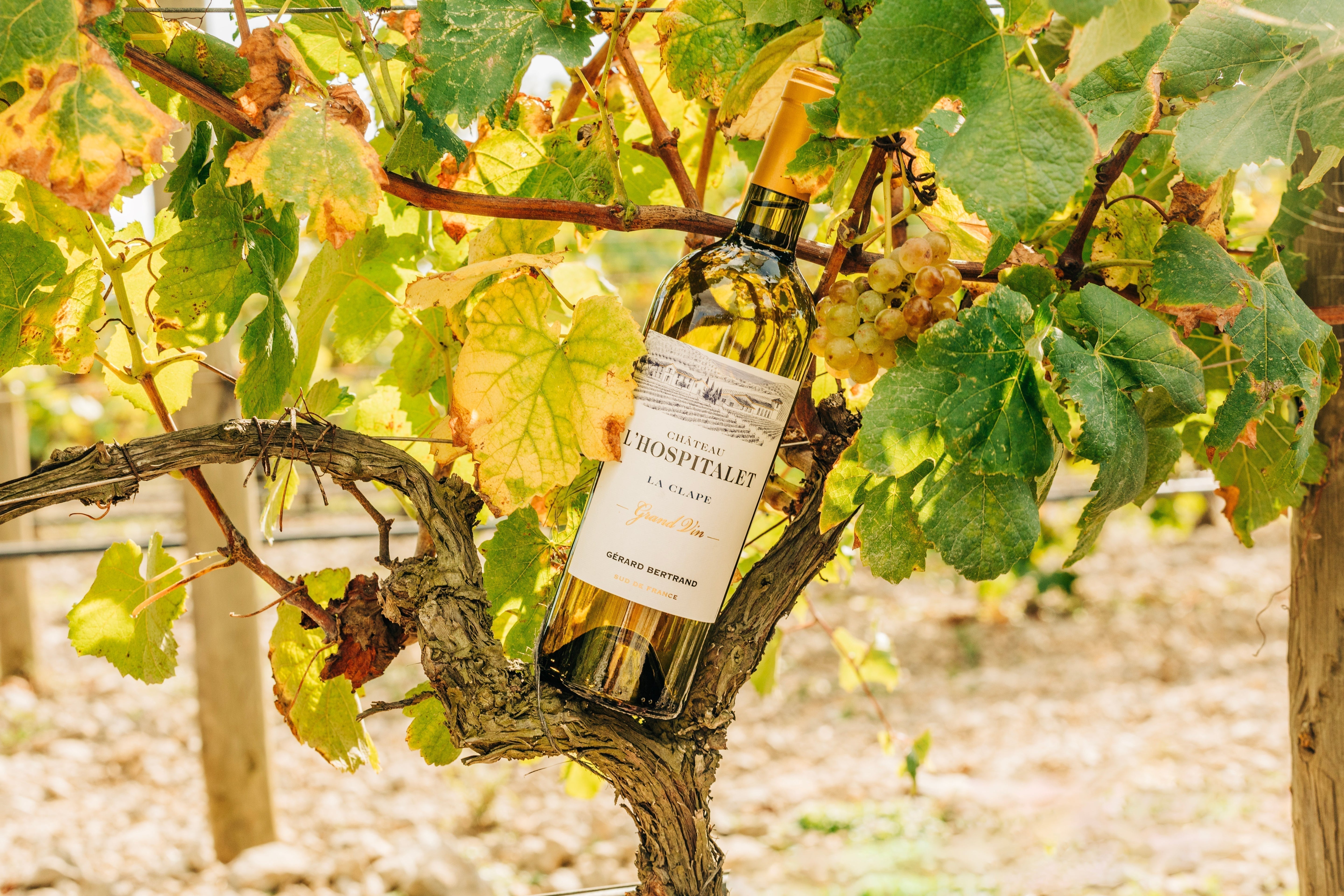
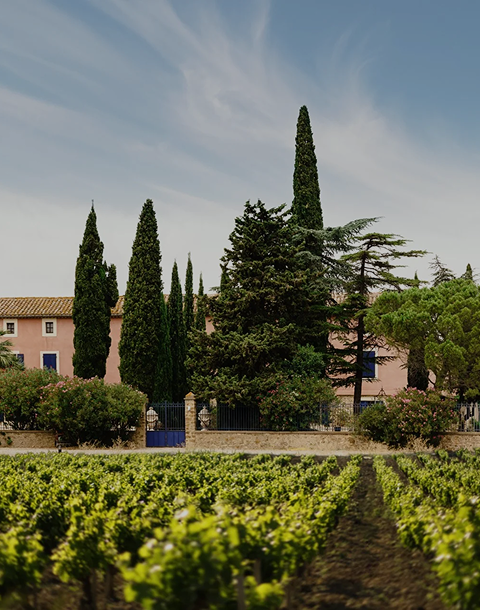
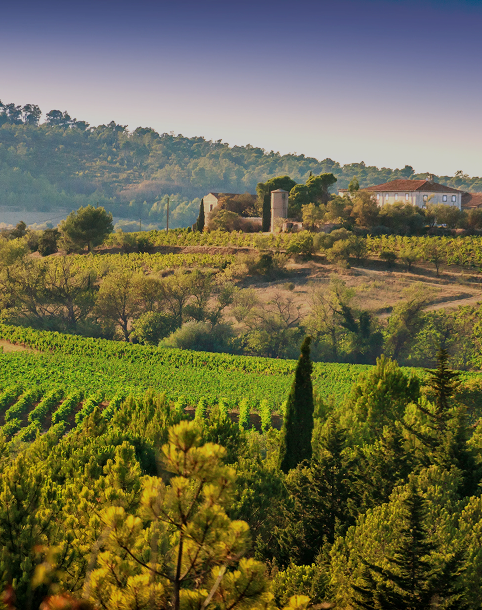
The lands of Saint-André, sheltered by the first foothills of the Corbières, are home to the vines of the domaine de Villemajou, where everything began for the Bertrand family. In the rows of Roussanne, the harvesting team picks the grapes which, blended with the Marsanne and Vermentino varietals, will give the next vintage of the Château de Villemajou Grand Vin White.
At the helm of this 2021 harvest, Fabrice Bousquet counts 12 years of service alongside Gérard Bertrand. Manager of 60 hectares, he gives continuous care to his plots throughout the year and rejoices in the healthy condition of the grapes: « We are proud of the health of our vines. For us, it is a real reward to see the fruit of our work. Today, we are happy, as a team. »
« Terroir is sublimated when the soils are alive »
In his latest book La Nature au cœur, Gérard Bertrand explains that « Terroir is sublimated when the soils are alive: the grapes of terroirs capture the imprint of their biotope with the help of wind, sun and rain and release, through the alchemy of fermentation, this origin in the wine ». For Fabrice, the vine is also a living organism that takes root in the soil. He has witnessed the evolution of the vine since the estate's conversion to biodynamics and explains one of the many differences: « In a traditional system, it is the roots closest to the surface that nourish the vine stock, whereas in biodynamics, the vine stock resumes a so-called "normal" progression with stronger rooting and a higher resistance potential ».
From the soil to the vine, from the vine to the leaf and from the leaf to the grape
The story of each plot begins on a terroir, preserved and energised by biodynamics. Here, no weedkiller or chemical fertiliser. The grass is cut, the soil turned over, using manual techniques. And at the end of the harvest, when the leaves fall naturally, one by one, it is sheep that take over on the estate. They feed on the grass, produce natural fertiliser and thus nourish the soil. The cycle of life then resumes its course and the taste, that much-sought bouquet of this "somewhere", returns. Harvest after harvest. On the Corbières terroir.
1 comment
Bonjour,
Avoir su sauvegarder ce terroir des Corbières n’a pas dû être une chose facile.
Bravo Gérard, ton côté visionnaire te récompense, je te félicite
Encore Bravo pour les magnifiques cuvées que tu nous proposes.
Bon courage
COMBES Roger
Leave a comment
This site is protected by hCaptcha and the hCaptcha Privacy Policy and Terms of Service apply.