
The Bertrand family

Wine vocabulary: the terms to know
Less talk, more wine! To put words to your wine sensations, gain a bit of expertise, or simply choose the right bottle: here are a few basics of wine jargon that should prove useful.
To be revised without moderation.
Terroir: Terroir refers to the set of geological characteristics of a wine-growing region (climatic and agronomic) that give the wine its unique particularities.
Grape variety: A grape variety is a type of grape used to produce wine. Each grape variety has its own gustatory characteristics, contributing to the complexity of wines.
Tannins: Tannins are naturally occurring compounds found in grapes, mainly in the skins and seeds. They confer structure and astringency to the wine.
Bouquet: Refers to the range of aromas developed by a wine after fermentation and ageing in the bottle.
Vintage: It corresponds to the year of harvest of the grapes used to produce the wine. It can influence the quality and character of the wine.
Maceration: Maceration is the process of leaving grape skins in contact with the must (grape juice) during fermentation, allowing the extraction of colour, aromas and tannins.
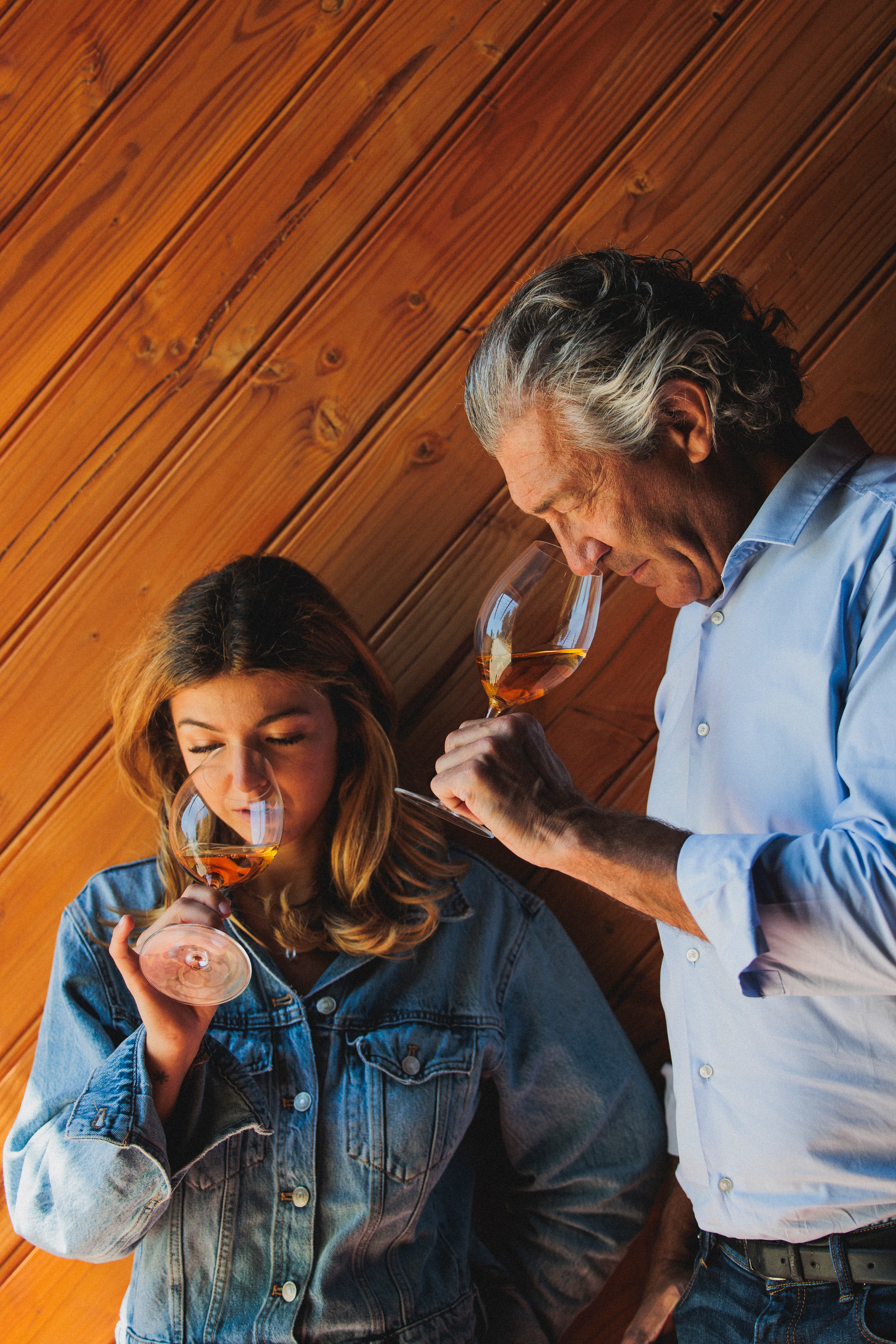
Nose: The nose refers to the aromas perceived by the sense of smell when tasting a wine. The aromas can be fruity, floral, spicy, oaky, etc. To find out more on this subject, discover our article on How to taste a wine: the steps to follow
Body: Refers to the sensation of fullness in the mouth from the wine. A wine can be light, medium or full-bodied.
Retro-olfaction: The perception of aromas in the mouth, which combines the sensations of the nose and the mouth. Notes of dark fruits and kirsch cherry, for example.
Attack: The first sensation in the mouth, the immediate effect of the wine. A velvety attack can give way to a perfect balance.
Finish: It corresponds to the gustatory and aromatic sensations that persist in the mouth after swallowing or spitting out the wine.
Robe: To describe the visual appearance of the wine, its "dress". A tawny, dark, purple or ruby robe can reveal clues about its age and maturity.
Mouthfeel: The general sensation of the wine in the mouth, including its texture. A delicate mouthfeel can develop with subtle intensity.
Ample: Used for a wine with an enveloping mouthfeel and an aromatic palette that fully occupies the mouth. An ample and silky experience.
Tannic: A powerful wine with pronounced tannins, which can give a certain roughness. Tannins soften with time.
Round: Tannins present, but without aggressiveness. A lively attack that evolves towards a certain roundness.
Fleshy: A powerful wine with a strong tannic structure. A fleshy texture that reveals its power.
Supple: A harmonious wine with pleasant levels of acidity and tannins. A supple texture that pairs perfectly with certain dishes.
Dry: A wine that gives a sensation of lack of moisture in the mouth.
Fruity: Fruit aromas perceptible on the nose and in the mouth. Notes of cherry, blackcurrant and raspberry…
Fresh: A character that evokes freshness and the marked acidity of the wine. An airy and delicate sensation.
Mineral: Characteristics reminiscent of stones, influenced by the terroir. A silky texture balanced by minerality.
Oaky : The subtle presence of woody notes from ageing in oak barrels. Complex aromas that blossom.
Thoroughbred: An elegant wine with energy, depth and complexity. A wine that stands out for its power.
Finish: The flavours and sensations that persist after swallowing (or spitting out) the wine. An intense and persistent finish.
And you? More of a star pupil or still learning? Share your experiences with us just below ⬇️
Our other blog articles to become an expert :
How to taste a wine: the steps to follow
Choosing a good wine in 5 steps
Food and wine pairings: how to match wines successfully?
Wine culture around the world: traditions and customs from elsewhere
@SoufianeZaidi
2 comments
Merci pour les bons conseils, c’est toujours apprécié. Ayant travaillé dans ce domaine à la SAQ au Québec, un rafraîchissement est toujours de mise. On est très chanceux de vous avoir rencontré sur le Norwegian Encore en février 2020 avant la pandémie. On aime beaucoup vos vins et notre fils habite Genève, donc, on a dégusté d’autres choix de vin qu’on a pas ici. Encore dernièrement, sur le Norwegian Viva, on a goûté souvent vos vins 😉. On espère retourner en France à l’automne 2024 et p-e visiter votre vignoble. Merci!
Michel Paquin
Merci pour cette sensibilisation à ce vocabulaire spécifique.
Félicitations pour votre reconversion dans le vin après avoir été un très bon joueur de rugby à Narbonne.
J’adore vos vins qui sentent le sud.
Bonjour du Pays Basque
Fabas
Leave a comment
This site is protected by hCaptcha and the hCaptcha Privacy Policy and Terms of Service apply.