
The Bertrand family
Demeter biodynamic wine from the Gérard Bertrand estates
Demeter-certified biodynamic farming for a terroir wine closer to nature

While organic farming and its "AB" label are today known to all, biodynamic wine and its "Demeter" label are much less so. And yet, biodynamics is a cultivation method that pushes the concept of "all-natural" even further than organic farming.
This cultivation method seeks symbiosis with nature. Man aims to strengthen organic life and the exchanges between the soil and the cultivated plant, with the primary consequence of no longer needing to use chemical products to protect it (pesticides) or feed it (fertilisers). With biodynamics, the winegrower tends the vine, strengthens it, and harvests its fruits, without exhausting it.
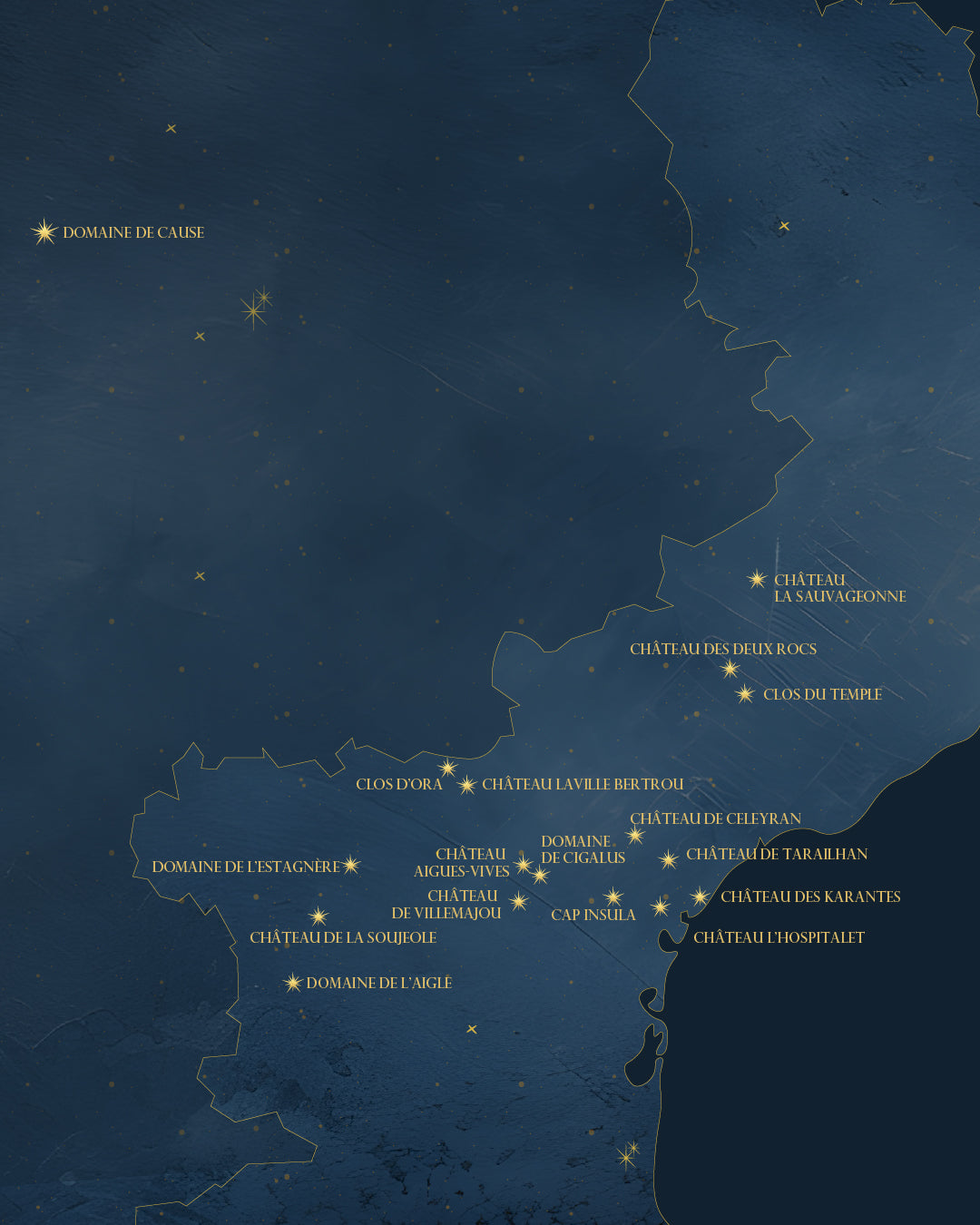
For Gérard Bertrand, a fervent defender of the environment, biodynamics is a true philosophy of life. It was in 2002, at the Domaine de Cigalus, that he converted his first vineyard to biodynamics. Convinced of the benefits of this farming method close to nature, he today applies the principles of biodynamics to all the vines of his estates in Languedoc-Roussillon, which now represents 950 hectares spread across the entire Occitanie region.

What is a biodynamic wine?
A biodynamic wine is a wine produced according to the principles of biodynamic farming.
Biodynamics, or biodynamic farming, is a cultivation method aimed at regenerating and strengthening the soil and plants, through the use of natural preparations such as horn manure or organic compost. Biodynamics also takes into account the influence of the planets, and in particular the lunar calendar. In a biodynamic farming system, all chemical and synthetic products are strictly forbidden. Only organic fertilisers are used. Moreover, unlike traditional wines and organic wines, a biodynamic wine receives very few oenological inputs during the winemaking phase.
Discover the full range and collection of biodynamic wines by Gérard Bertrand.
Biodynamic wines, ambassadors of terroir wines
Gérard Bertrand, as an unconditional lover of the terroirs of the south of France, and in particular those of Languedoc-Roussillon, crafts in each of his estates high-quality biodynamic wines with a strong identity. This is notably the case at the Domaine de l'Hospitalet, producing Château l'Hospitalet La Clape Grand Vin Red, wine elected best red wine in the world by the IWC in 2019. Indeed, by virtue of its cultivation method that follows the plant's own direction rather than that of productivity, biodynamics allows the grape to draw its resources directly from the terroir and the different layers of the soil.
The grape is thus no longer on a drip of chemical fertilisers that would develop it artificially. Thanks to the rich organic life of the soil, the vine feeds on the living humus of its terroir. With its benefits, the grape develops optimally, concentrating sugars, trace elements and vitamins. The wine produced from this grape then perfectly expresses where it comes from, its terroir, its history.
Cultivating the vine using biodynamic farming thus makes it possible to produce powerful and deep wines, more fruity and more balanced than traditional wines. A vine cultivated using biodynamics allows the wine to express the full potential of its terroir, its qualities and its own unique characteristics.
The Demeter label
Today, while many winegrowers boast of practising biodynamic cultivation of their vines, only obtaining the Demeter label can certify compliance with a strict and fully transparent set of specifications. Present in 53 countries, the Demeter label adopts the specifications of the Organic label while adding more stringent measures, particularly regarding inputs, in order to respect the principles of biodynamics. Of course, in biodynamics, pesticides and chemical fertilisers are strictly prohibited.
With an even more ecological vision, Demeter biodynamic wines comply de facto with the specifications of organic farming. They therefore also carry the organic "AB" label.
However, while today the Organic label allows consumers to be assured they are purchasing a wine that has not used chemical products (fertilisers, pesticides), many so-called "industrial" practices are still permitted in the production of an organic wine and do not allow the wine to express its full potential.
Biodynamic farming, through the Demeter label, thus represents a higher level of requirement in terms of respecting a more natural and more artisanal production process. This is notably the case for Clos d'Ora (organic and Demeter red wine), and Clos du Temple (organic rosé wine and Demeter), two estates cultivated using biodynamics producing an exceptional wine and using animal traction (a mule) to work the soil.

The qualities of a biodynamic wine
Made from vines cultivated using natural methods, without synthetic products, biodynamic wines offer a rich and delicate flavour palette. Whereas a traditional wine presents only two or three predominant aromas, a biodynamic wine is much more complex, expressing a multitude of flavours and aromas.
The wine is delicate on the nose, silky on the palate, with a predominant place given to fruit. More mineral and more balanced, biodynamic wine represents the culmination of the work of the vine cultivated with love and patience.
With a biodynamic Demeter wine, digestibility is also significantly improved, thanks in particular to its very low sulphite content. The sulphite content of a biodynamic wine is indeed at least 30% lower than that of an organic wine.
People with digestive difficulties will thus find a wine more easily assimilated by the body.
Discover further explanations on the different types of wine:
Rosé wine
Languedoc organic wine
Organic rosé wine, the best rosé wine and the Languedoc rosé wine
And to go further:
How rosé wine is made : how is it produced?
Gérard Bertrand, the story of a family passion for the vine
The Châteaux and Estates of Gérard Bertrand
The online shop for Gérard Bertrand wines
Our latest news
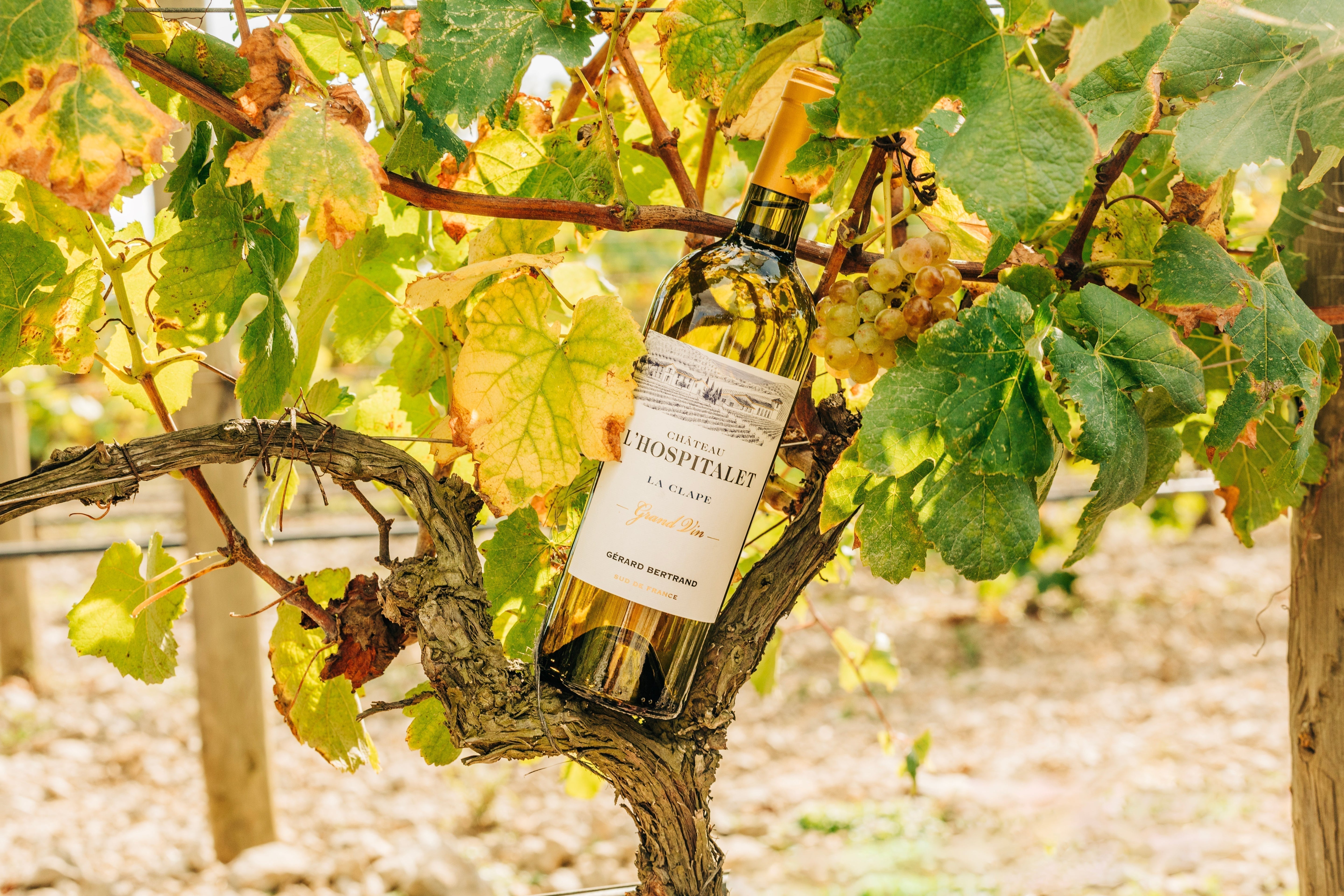
Château l'Hospitalet Grand Vin
Discover a Grand Vin White shaped by the sea, altitude and the minerality of La Clape.
Read the article
Win 2 VIP Tickets for Jon Bon Jovi — Hampton Water Competition
From 30 June to 15 August 2026, try to win 2 VIP tickets to the Jon Bon Jovi concert on 28 August in Edinburgh.
Read the article
A Second Life for Our Wooden Crates
A fine example of reuse: in Germany, our wooden crates are finding a second life with an association committed to protecting bats.
Read the article