
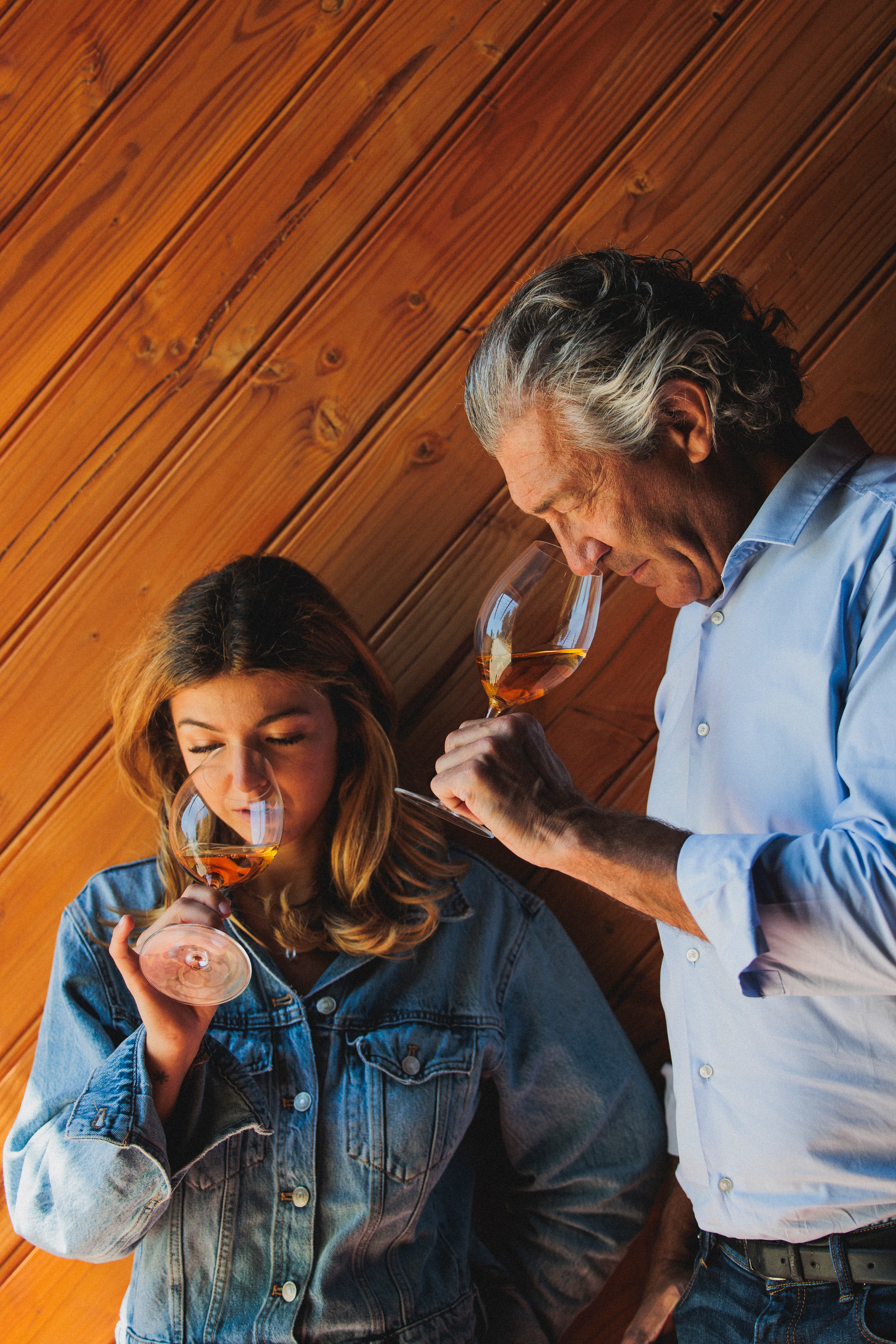
The Bertrand family
Grands Vins Rouges: wines of expression

These iconic wines are Grands Vins Rouges from an exceptional terroir, crafted with the greatest care. Unlike other wines, Grands Vins Rouges are different. Indeed, not only is the organoleptic quality fully realised, but the production method also creates differences in terms of cultivation and winemaking — even though the process of making red wine is common to all types of wine. To produce Grands Vins Rouges, one must always return to the heart of the vineyard. For what makes a Grand Vin Rouge is the care taken during precision pruning of each old vine stock, in order to achieve a controlled yield and a terroir expression that undergoes no modification through oenological inputs or technological processes aimed at correcting the authenticity of the wine.
A preferred terroir

Yes, returning to the very heart of the vineyard's essence to produce Grands Vins Rouges. For this is where everything is decided. Indeed, planting a vineyard is an undertaking that requires looking ahead to future generations. However, the grape varieties chosen for this preferred terroir are in keeping with the knowledge acquired from past generations, as well as the results of agronomic and oenological analyses.
Grands Vins Rouges: intergenerational research
Everything is decided at the time of planting. This is a notable difference: between cultivating a vine for an entry-level wine on a high-yield terroir and managing a vine for a Grand Vin Rouge on an expressive terroir. Indeed, the approach is not the same, since planting a vineyard intended to produce Grands Vins Rouges is a commitment for 60, 70 or even 100 years. As is the case for the family vineyard of Gérard Bertrand at Château de Villemajou. This vision requires surrounding oneself, both upstream and downstream, with those who have experience of the place and an understanding of the microclimates of that geographical area. As well as professionals in agronomy and oenology who will be able to provide precise data according to the grape varieties, the soil typology and the vine establishment to be practised according to the row spacing and the desired leaf surface area for a Grand Vin Rouge.
A communion between terroir expression and that of the grape variety
The difference from standard wines also lies in a precision viticulture applied to exceptional plots. Indeed, qualitative excellence is also achieved through the exposure and microclimate in which the vines thrive. This meticulous viticulture does not only serve to develop the aromatic profile of a grape variety. It is magnified in a communion between the expression of terroir and that of the grape variety. However, a Grand Vin Rouge is also a wine that, with all its excellence, also identifies with an appellation. Thus, Grands Vins Rouges are unique wines that express each of the original nuances of the great viticultural terroirs. The typicity of the Domaine de Cigalus is a prime example: the Merlot, Cabernet Franc and Cabernet Sauvignon, Caladoc, Syrah, Mourvèdre and Carignan grape varieties are cultivated on a mosaic of terroirs in the Aude region, between Ocean, Mountain and Sea.
And also a total respect for nature, with practices aimed at preserving and promoting the biodiversity present on the wine estate according to its geographical cradle.
The production of Grands Vins Rouges: a meticulous observation of maturity
What sets the Grands Vins Rouges apart from other wines is also their phenolic maturity. And not every vintage is necessarily conducive to the full maturation of the grape berry in all its potential. Technical maturity essentially defines the potential degree and the acidity. It is assessed through analysis, but it is insufficient to determine the maturity of Grands Vins Rouges. Therefore, observing physiological maturity is more interesting, as it aims to detect the evolution of the vine's vegetative behaviour. In this case, it demonstrates the vine's capacity to draw from its reserves a particular expression. The Holy Grail for Grands Vins Rouges is to achieve phenolic maturity. This maturity of the skins and seeds promises premium wines.
The know-how of peasant common sense with the vine
Following this intergenerational research work, peasant common sense guides the day-to-day know-how of the viticultural practices that harmonise throughout the year with the vegetative cycle of the vine. According to its progression and the climatic conditions, the vineyard is accompanied by the hand of man to protect its capacity to produce the quintessence of its soil's compounds and the typicities of its grape varieties. Thus, the work of the land is carried out with the greatest delicacy. The management of the grass cover is mastered to perfection so that the vine can flourish. Especially at the time of its flowering, if rain and humidity are too present then the floral cap does not detach easily and contributes to the development of diseases. Hence the good fortune, in Languedoc, of benefiting from the presence of wind during this phase.
Patience and precision for unique red wines
Patience and precise gestures bring out the natural elegance of these red wines with their unique character. Once the harvest has been collected by hand, it arrives at the vat room. Under these conditions, the fermentations are closely monitored so that they fulfil their full promise. In recent decades, many techniques such as thermovinification have made it possible to produce standardised wines from grapes that may lack ripeness and quality. In contrast, Grands Vins Rouges are obtained by traditional winemaking methods supported by oenological mastery in order to sustain the aromatic expression of a wine throughout its ageing. This is why the maturity of anthocyanins — the polyphenolic compounds in the grape — has a positive influence on the entire vinification of red wine, enabling the cellar master to obtain a superior quality wine. In this way, the wine develops its credentials during its ageing period.
Tasting Grands Vins Rouges: wines of expression
It is undeniable that every Grand Vin Rouge, by virtue of its aromatic complexity, must be served at THE right temperature. These red wines are wines of excellence, and to fully appreciate them it is important to know a few rules. This is why consulting sommeliers on the serving temperature conditions of the wine guarantees a truly wonderful tasting experience. Moreover, tasting a wine is an art de vivre of French gastronomy that is distinguished by its refinement.
Serving Grands Vins Rouges
Grands Vins Rouges are the fruit of men and women passionate about attention to detail, performing meticulous gestures imbued with culture. Consequently, tasting a bottle demands attention. Welcoming guests by serving wine in stemmed glasses and pairing food and wine are among the priorities for honouring this wine. But the aromatic power of the finest red wines very often produces opulent, tannic wines on the palate. So beware of cold, which retracts the aromas and tightens the tannins, resulting in a palate far from expectations. To do it properly, Grands Vins Rouges should not be served at a temperature below 14 degrees C.
Sublime geographical food and wine pairings
Just as with Grands Vins Rouges, the provenance and production conditions of the dishes impact not only the quality of the products but also their flavours. This is why pairing products from the same terroir is strongly recommended. As is the case with the Grands Vins Rouges from the Corbières alongside a Cassoulet. A genuine terroir food and wine pairing with the Grand Vin Rouge blend from Château L'Hospitalet, with its luminous robe, notes of black pepper and ripe tannins, for a wonderful moment of sharing at a fine table. As well as an exceptional wine such as La Forge — Georges Bertrand's favourite plot — which pairs sumptuously with aged meat. Its character, with its notable viscosity, reveals a complex bouquet offering an enchanting experience on the palate that is reminiscent of walks through the Corbières.
List of Grands Vins Rouges:
Château L'Hospitalet : this Grand Vin Rouge 2020 vintage can be enjoyed now whilst also having a very promising future.
Château des Karantes : this Grand Vin Rouge 2019 vintage is served at 17 °C.
Château La Sauvageonne : 2020 vintage to enjoy now or to keep for a few years.
Or discover our full collection of rosé wines.
Discover the Gérard Bertrand estates :
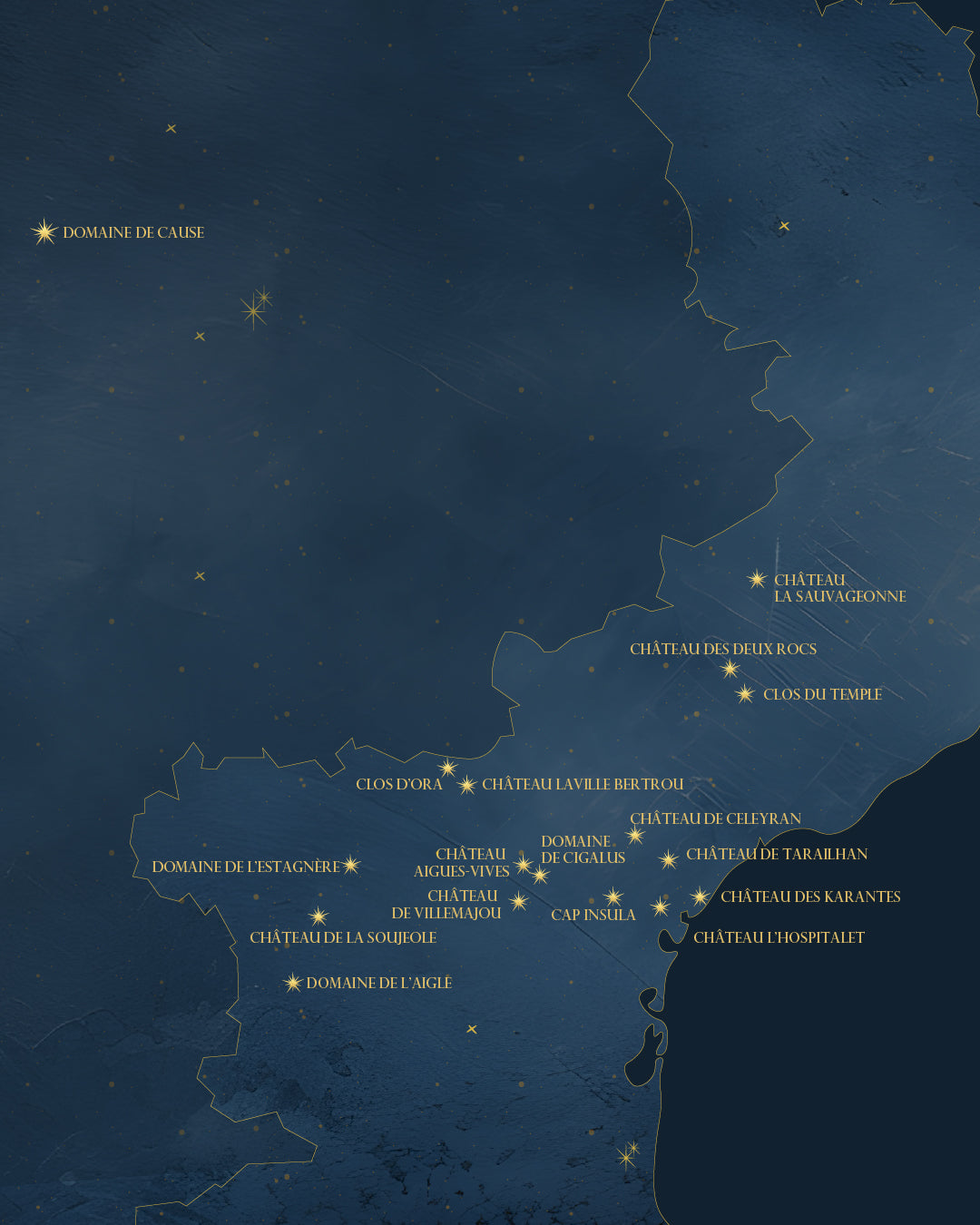
Its wine châteaux of Languedoc-Roussillon
Its expertise in the production of biodynamic wines
Our latest news
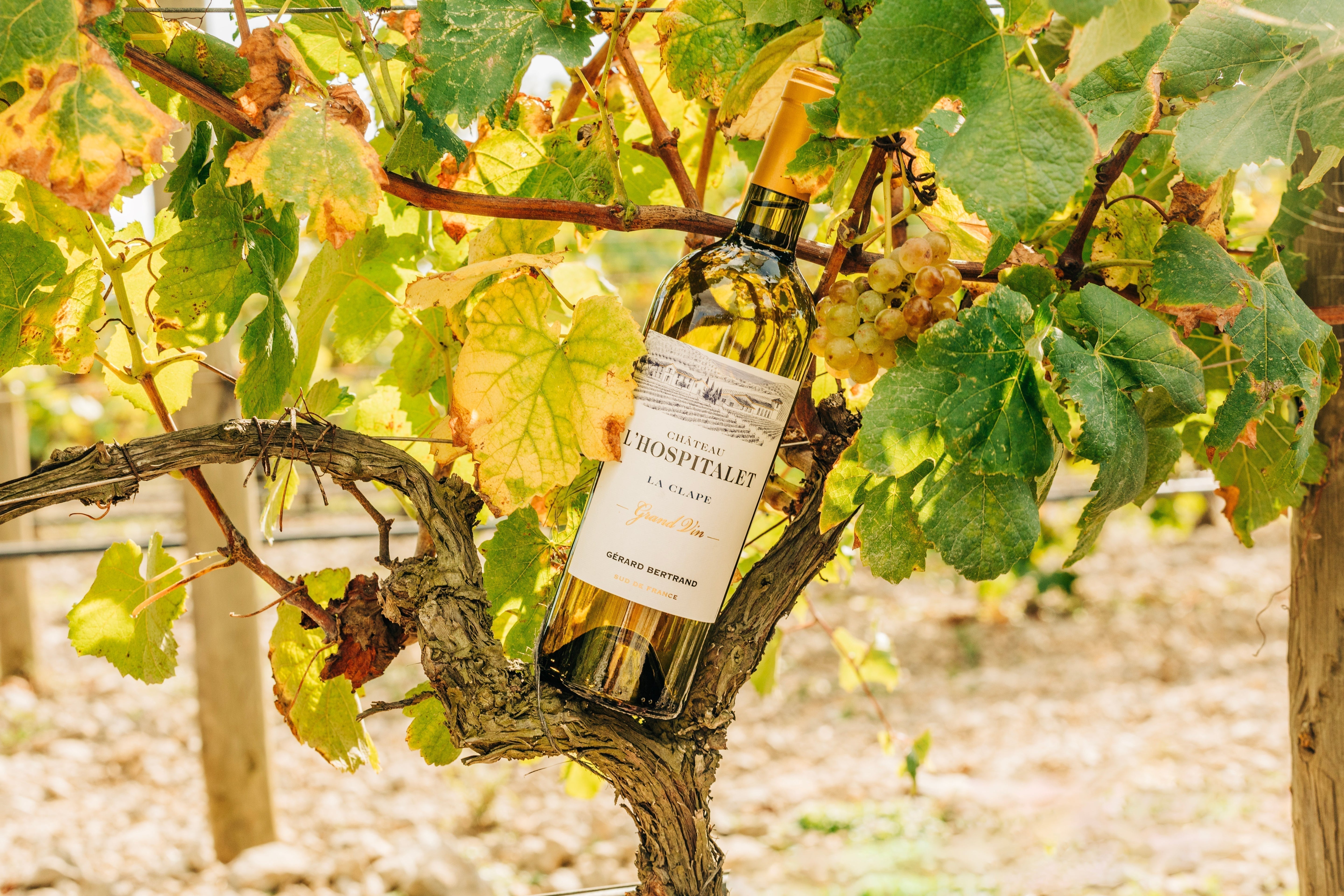
Château l'Hospitalet Grand Vin
Discover a Grand Vin White shaped by the sea, altitude and the minerality of La Clape.
Read the article
Win 2 VIP Tickets for Jon Bon Jovi — Hampton Water Competition
From 30 June to 15 August 2026, try to win 2 VIP tickets to the Jon Bon Jovi concert on 28 August in Edinburgh.
Read the article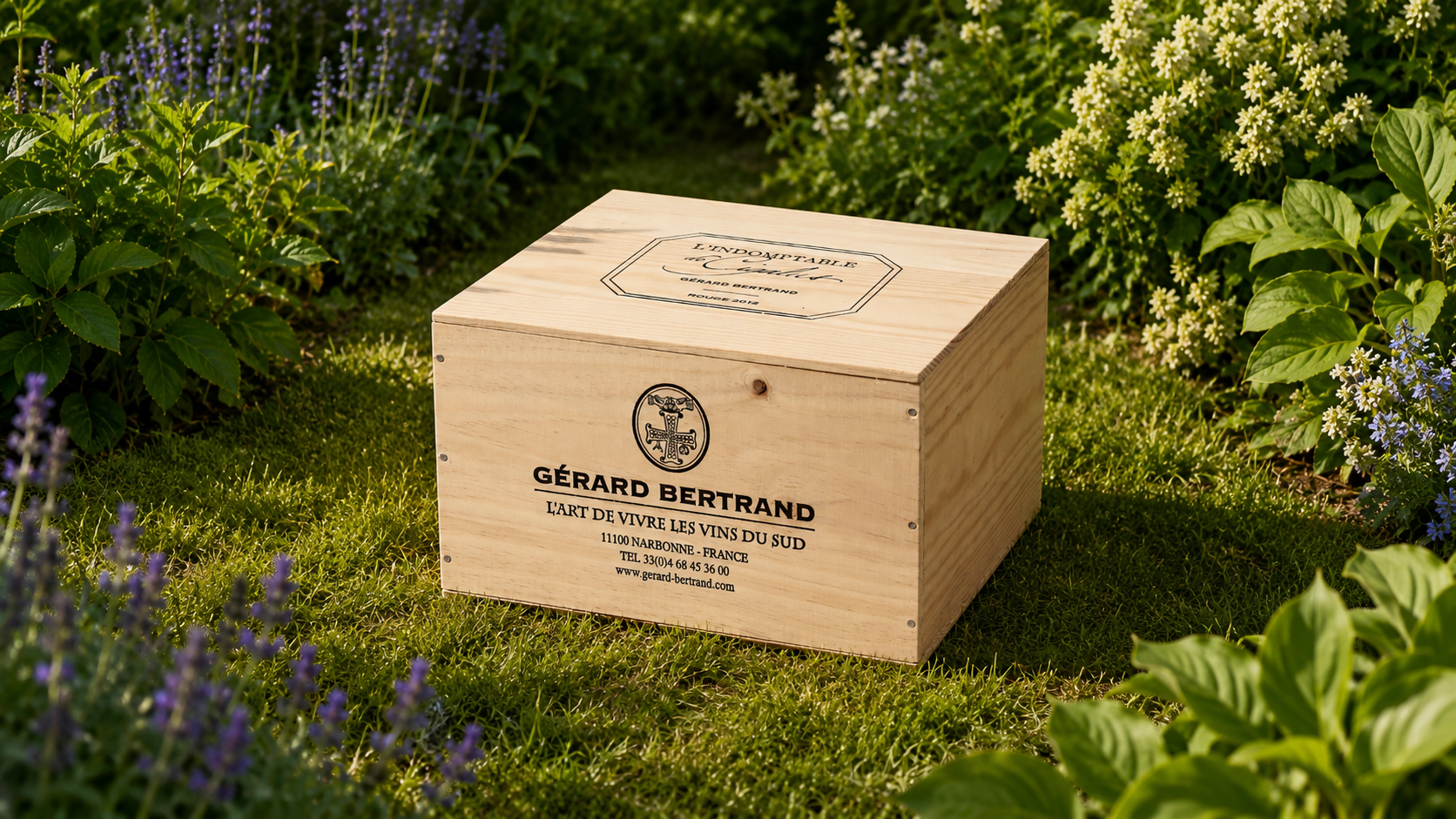
A Second Life for Our Wooden Crates
A fine example of reuse: in Germany, our wooden crates are finding a second life with an association committed to protecting bats.
Read the article