
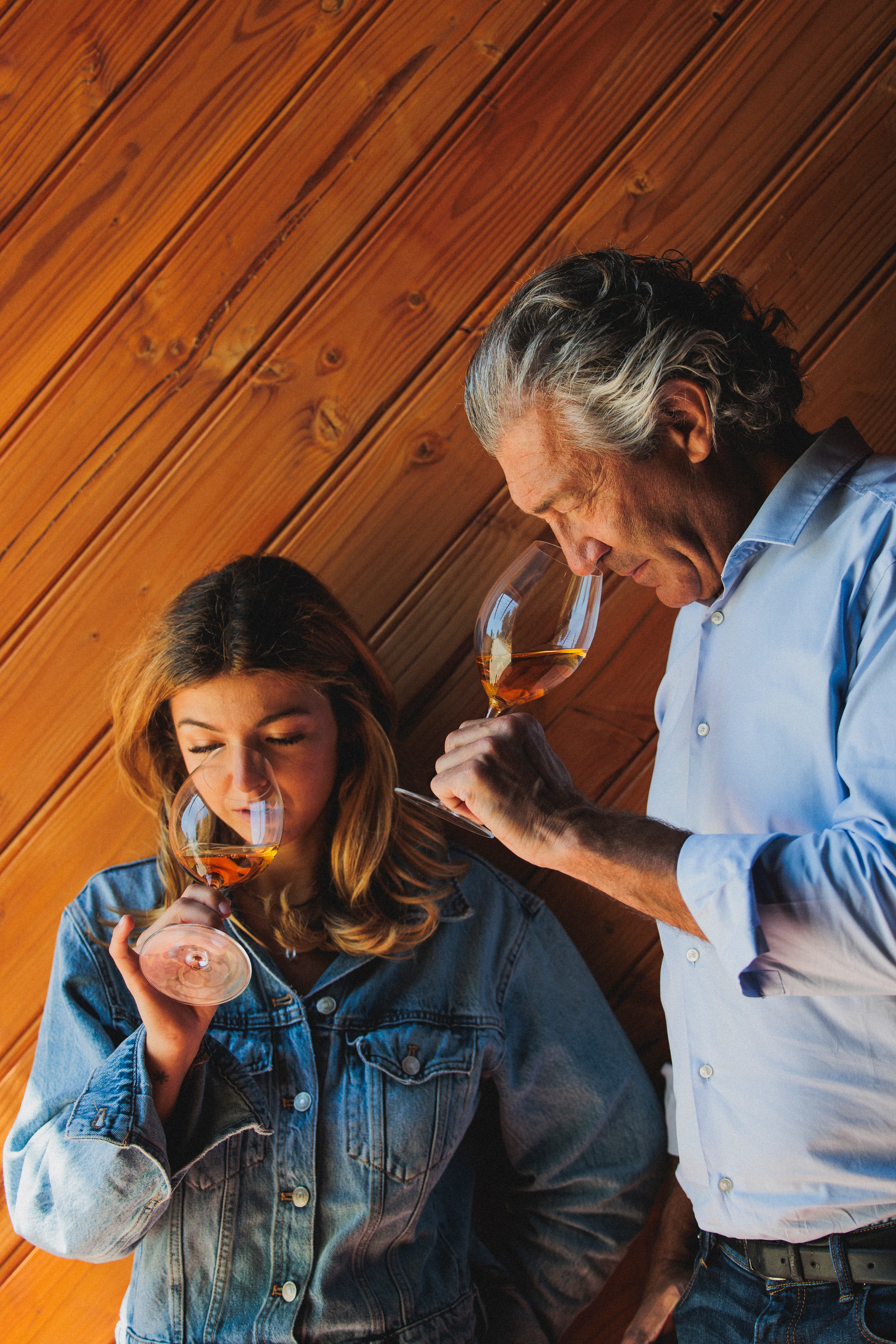
The Bertrand family
What is a Natural Wine?

Wine lovers from around the world are increasingly drawn to natural wines. But what makes these wines so special? Why do they generate so much interest?
Definition of Natural Wine
A natural wine is produced with a minimum of human intervention, both in the vineyard and in the cellar. This means that winegrowers who produce natural wine strive to work in a sustainable and environmentally respectful manner, avoiding synthetic chemicals such as pesticides and herbicides.
In the cellar, the winemaking process is also simplified to avoid the addition of products such as commercial yeasts, sulphites or other additives. The result is a wine that fully expresses the terroir, that is, the unique combination of soil, climate and local know-how.
 @DRINKINMODERATION
The Natural Winemaking Process
Natural winemaking rests on a few key principles:
- Organic or biodynamic farming: Winegrowers use sustainable agricultural practices, often following the principles of organic or biodynamic farming. This means avoiding synthetic chemicals and promoting biodiversity in the vineyard.
- Manual harvesting : The grapes are often harvested by hand to avoid damaging the bunches and to ensure a careful selection of fruit at optimal ripeness.
- Spontaneous fermentation : Instead of adding commercial yeasts, natural wine ferments thanks to the indigenous yeasts present on the grapes and in the cellar. This spontaneous fermentation can produce wines with unique aromatic profiles.
- Minimal intervention: During winemaking, intervention is limited. This means little or no filtration, no fining, and very limited or no use of sulphites.
Natural Wine and Sweet Wine
The term "sweet wine" refers to a wine that contains a significant quantity of residual sugar, which gives it a sweet flavour. Sweet wines can be produced in different ways, for example by stopping fermentation to preserve the natural sugar of the grapes or by adding a concentrated must.
Although natural wines are often dry, there are natural versions of sweet wines, where the residual sugar comes naturally from the grapes, without the addition of sugar or additives. Vins doux naturels, for example, are fortified sweet wines produced in certain wine-growing regions of France. However, not all vins doux naturels are necessarily natural wines in the strict sense of the term, but some producers adopt natural practices in their production.
@David Fritz Goeppinger
What is Vin Doux Naturel?

The vin doux naturel (VDN) is a type of fortified sweet wine, produced mainly in France in regions such as Roussillon and the Rhône Valley. VDNs are made by adding grape spirit to the fermenting must, which stops fermentation and preserves the natural sugar of the grape, hence their sweetness.
The Characteristics of Vin Doux Naturel

@DRINKINMODERATION
Natural sweetness: Vin doux naturel preserves the residual sugar of the grape, offering a sweetness that can range from moderate to very intense.
Rich and complex aromas: Due to the winemaking process, VDNs can present aromas of ripe fruit, honey, spices and sometimes oxidative notes of nuts or caramel.
Ageing potential: Thanks to the presence of added alcohol and sugar, vins doux naturels often have excellent ageing potential, developing more complex aromas and flavours over time.
Among the examples of vins doux naturels, one can cite Muscat de Rivesaltes, Banyuls, and Maury. These wines are often paired with desserts, but can also be enjoyed on their own or with cheeses.
Find out more about the characteristics of vin doux naturel.
The Challenges of Natural Wine

Despite their growing popularity, natural wines are not without their challenges. Their production requires specific expertise and can be riskier due to the absence of stabilising products. Natural wines are also more sensitive to vintage variations and can display perceived faults, such as reductive or volatile aromas, which do not appeal to all consumers.
The natural wine represents a fascinating and authentic approach to viticulture and winemaking, prioritising respect for nature and the expression of terroir. As the market continues to grow, natural wine is attracting increasing interest among environmentally conscious consumers seeking new taste experiences. By exploring the nuances between sweet wine, natural wine and vin doux naturel, wine lovers can discover a vast range of flavours and stories that enrich their understanding and appreciation of this fascinating world. Whether you are a novice or a connoisseur, the world of natural wine offers a sensory adventure just waiting to be explored.
Find out more about sweet wine and natural wine:
- From grape to bottle: The process of creating sweet wine
- Do you know sweet wines?
- Vins Doux Naturels vs Fortified Wines: The Differences Explained
- Gérard Bertrand sweet wines: A symphony of flavours
- Discover the best Gérard Bertrand wines:
- Best red wine
- Best white wine
- Best rosé wine
- Best orange wine
Our latest news

Win 2 VIP Tickets for Jon Bon Jovi — Hampton Water Competition
From 30 June to 15 August 2026, try to win 2 VIP tickets to the Jon Bon Jovi concert on 28 August in Edinburgh.
Read the article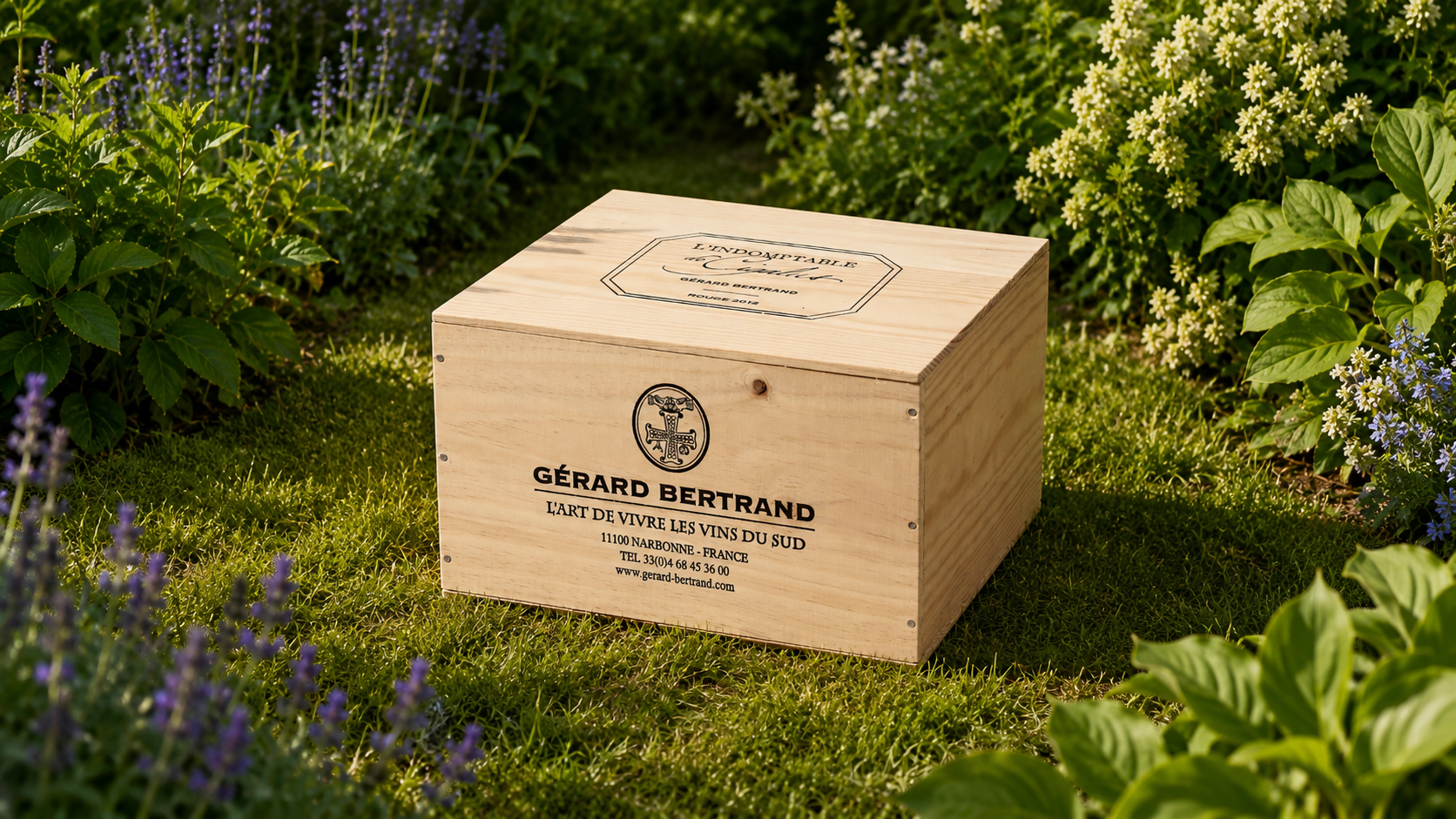
A Second Life for Our Wooden Crates
A fine example of reuse: in Germany, our wooden crates are finding a second life with an association committed to protecting bats.
Read the article
Éloge Des Sens
On Saturday 11 July 2026, from 6pm to 8pm, join us at the Boutique du Château to celebrate its anniversary.
Read the article