
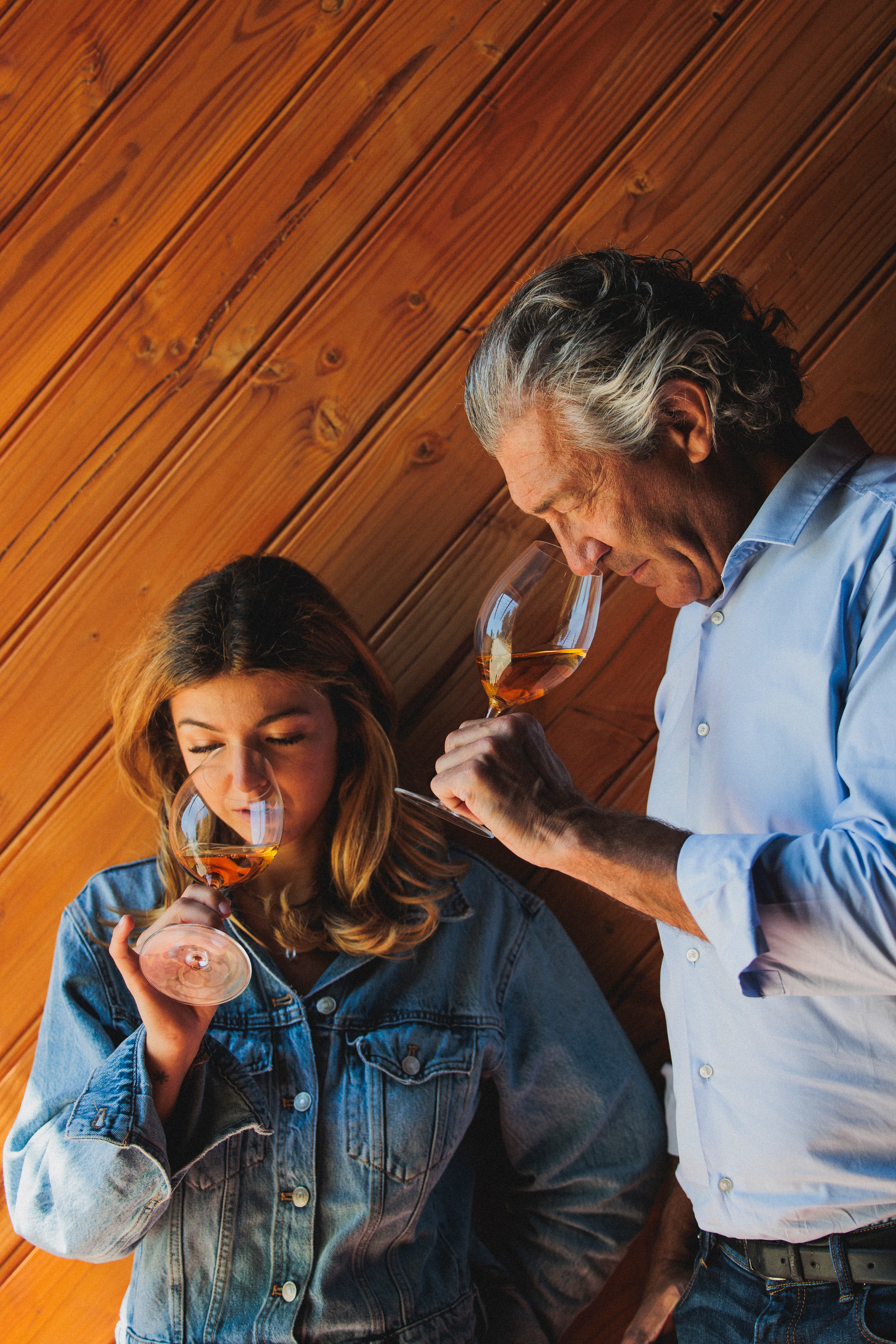
The Bertrand family
Why are the Grands Vins Rosés exceptional?

Rosé wine is appreciated for its ability to adapt to every occasion. Tête-à-tête, with friends, at a cocktail dinner, at a Michelin-starred table, in summer as in winter… These are all occasions for which rosé wine is a delightful alter ego.
Even though rosé wines enjoy great success, certain wine producers are committed to crafting exceptional Rosé Wines. They have been working tirelessly for many years in search of the singular expression of terroirs and their grape varieties to shape Grand Rosé Wines that are ever more precise, beautiful, aromatic and flavourful.
Since there is a sensory interaction between colour, aromas and flavour on the palate. Without attentive listening to the terroir, Grand Rosé Wines cannot be composed in their expression of perfection. Indeed, it is one of the most delicate and precise creations to craft high-end rosé wines recognised at tasting by the greatest wine professionals.
The expression of an exceptional terroir

The word terroir is purely French; there is no equivalent to translate this term into English. It refers to the typology of the soil, the climatological influence and the biodiversity present in that place. This term is consolidated by the practice of biodynamics. In the south of France, with regard to the terroir of rosé wines, a vast diversity of combinations exists. As well as the influence of winds and sea air, which also develops that little extra that makes the difference within an exceptional terroir.
At Château La Soujeole Grand Vin Rosé, A.O.P Malepère, the estate is situated in an ecological entity known to botanists for its plants and shrubs, of varied, Mediterranean and oceanic species. Here, the plurality of the terroir's components takes on its full meaning.
The soil and its geology on Grand Rosé Wines
The action of Mother Nature tamed
To produce Grand Rosé Wines, a vineyard must benefit from optimal climatic conditions. That said, Mother Nature does not tame so easily. It is she who sets the tone on the quality of the vintage, influencing the cultivation of these exceptional rosé wines. In Languedoc-Roussillon, sunshine levels are among the highest in France. This promotes the ripening of grape varieties typical of the South of France, such as red berries like Mourvèdre, Syrah, Grenache and Cinsault, and white berries like Vermentino and Viognier. The Mediterranean Sea acts as a thermal regulator, triggering the early resumption of vegetation growth in spring.
But if Mother Nature premeditates periods of drought, the winemaker must face the spread of various complications such as powdery mildew, which can go as far as destroying the flower clusters and grape berries.
The expertise of cultural practices
The deep respect for the intrinsic characteristics of a soil is expressed through natural viticulture without chemical inputs, manual harvesting and pruning that ensures the longevity of the vines. Because Grand Rosé Wines begin at the vine on living soils. These exceptional rosé wines are authentic wines born of a transgenerational expertise that is passed on and complemented by cutting-edge technology. Without environmentally respectful viticulture, no alchemy between these two bodies of knowledge in pursuit of purity can take place. Clos du Temple is the very expression of seasoned expertise. Thus, the old vines of the preserved valley of Cabrières reveal the terroir through the peasant common sense that tends to each vine stock.
Thus, the best cultural practices to support and encourage the proper development of the grape's vegetative cycle are applied. Such as the necessity of relying on the sidereal cycle, the preparation and dynamisation of biodynamic treatments, the use of compost in order to magnify the grape berries that carry within them all the subtlety of their terroir.
A delicate and precise elaboration
The obvious particularity of Grand Rosé Wines is a manual harvest with limited yields in order to produce only grapes with a deep and intense aromatic palette. During the harvest, the sorting is rigorous to retain berries of optimal quality.
The evolution of the aromatic compounds of Grand Rosé Wines
In recent years, the progression in the quality of the aromatic compounds of rosé wines has continued to improve. In the past, rosé wines were essentially endowed with fermentary aromas, notably isoamyl acetate marked by scents of banana and English sweets, accompanied by ethyl butanoate releasing floral notes. Nowadays, the trend is towards the presence of aromatic compounds from the thiol family, such as 3-mercapto-hexanol releasing aromas of citrus, exotic fruits and rhubarb, combined with its acetate revealing extracts of boxwood and tropical fruits, as well as other compounds that contribute to the complexity of the aromatic bouquet of Grand Rosé Wines.
Innovation in winemaking to elevate elegance
Thus, the art of winemaking carried out in the elaboration of high-end rosé wines rests on managing the harvest, intervening as little as possible in the winery and cellar. This is why respect for the raw material is paramount, in order not to force fermentations, to avoid oenological inputs, whilst preserving the originality of the terroir and grape varieties. All while giving time, to time, and modernising the winemaking process to integrate improved winemaking techniques in order to elevate the natural elegance of rosé wines.
It is forged from this coherence that the Villa du Château La Sauvageonne is crafted. This Grand Vin Rosé voted best rosé in the world in 2017 and 2018 is the result of a co-fermentation of Grenache, Vermentino and Viognier grape varieties, followed by a fermentation beginning in tank and finishing in French oak barrels to enhance the unctuousness and structure of this Grand Vin.
Thus, inspired by the fermentation process of white wines, producers of high-end rosé wines craft Grand Rosé Wines.
Tasting: the consecration of Grand Wines
Tasting: this is the moment of truth! Of course, with Grand Rosé Wines, food and wine pairings are simple. Since rosé accompanies all varieties of dishes and accompaniments, both during the aperitif and throughout a meal. Nevertheless, recognition at tasting by wine professionals is the moment of consecration. Indeed, even though these wines are produced in respect of the environment, the singularity of the terroir, and a precise and delicate elaboration.
When one of these rosés is voted best rosé in the world and receives the title of "Master", this reinforces the initiatives taken and the efforts made to craft Grand Wines as well as possible and with ethics. Gérard Bertrand works in this direction, with regard to the Grand Vin Rosé Clos du Temple, the best rosé wine in the world is born in the cradle of rosé wines.
This distinction is awarded by discerning tasters who conduct the olfactory analysis blind on hundreds of rosé wines. They are on the lookout for the slightest flaw and in search of the most pure, distinguished and unmade-up style, revealing with virtuosity the personality of the terroir. Mentions, citations in specialist magazines and scores from wine professionals are rewards testifying to the precise work carried out in the vineyards and in the cellar.
Selection of Rosé Wines and Grand Rosé Wines
List of rosé wines:
- Clos du Temple 2021 and its case: a work of art to give as a gift
- Change Grenache Wine Rosé: an organic rosé wine, 2022 vintage
- Domaine de l'Estagnère : rosé wine without added sulphites, 2021 vintage
- Domaine de Villemajou: 6 bottles of Corbières rosé wine, 2021 vintage
- Art de Vivre : 6 bottles of A.O.P rosé wine from the Languedoc to reuse the bottle endlessly
- Or discover our entire collection of rosé wines.
Learn more about orange wine, red wine or rosé wine and find out everything about organic rosé wine.
Discover the best Gérard Bertrand wines:
Discover the Gérard Bertrand estates:
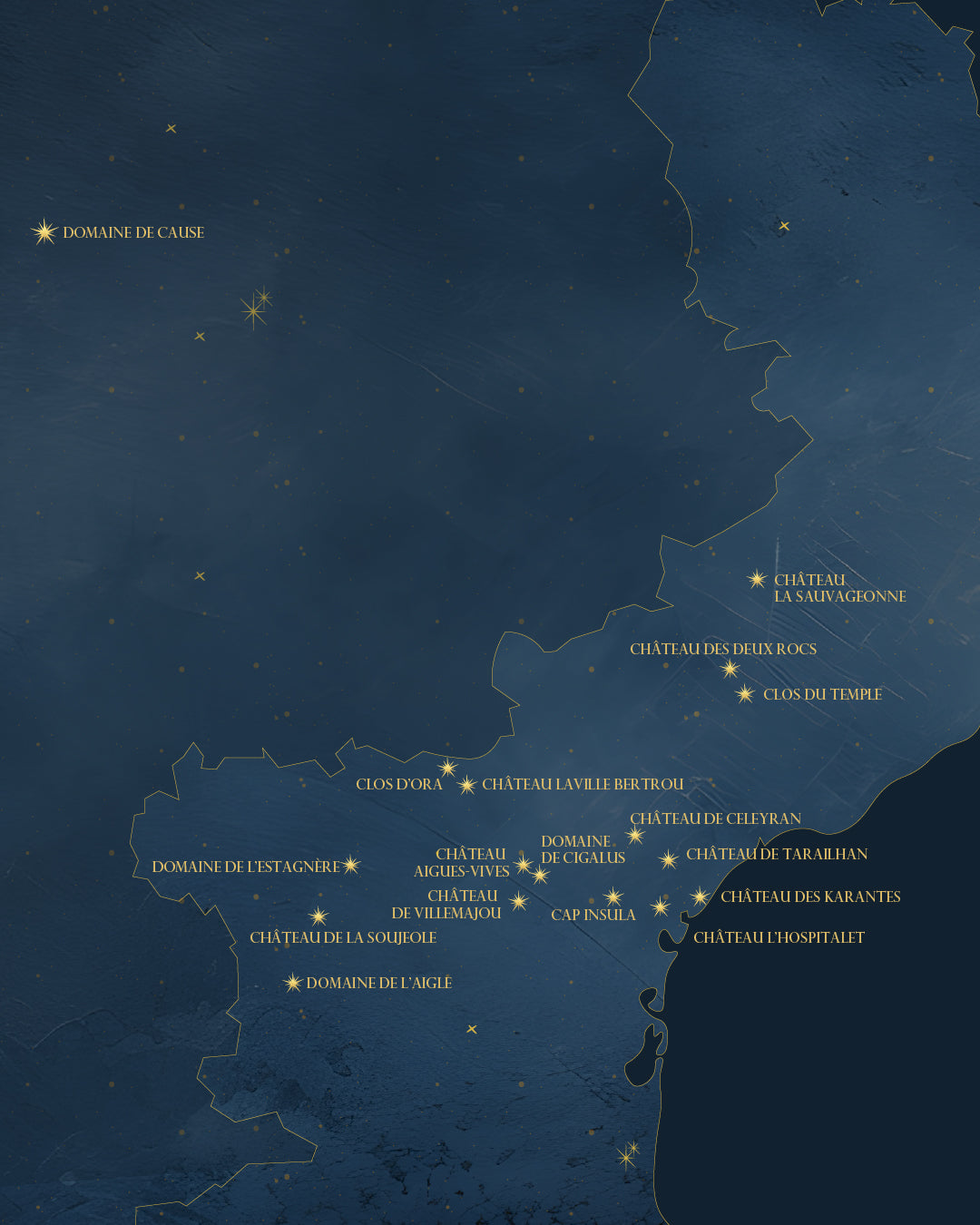
- Its wine-growing châteaux of Languedoc-Roussillon
- Its expertise in the creation of biodynamic wines
Our latest news
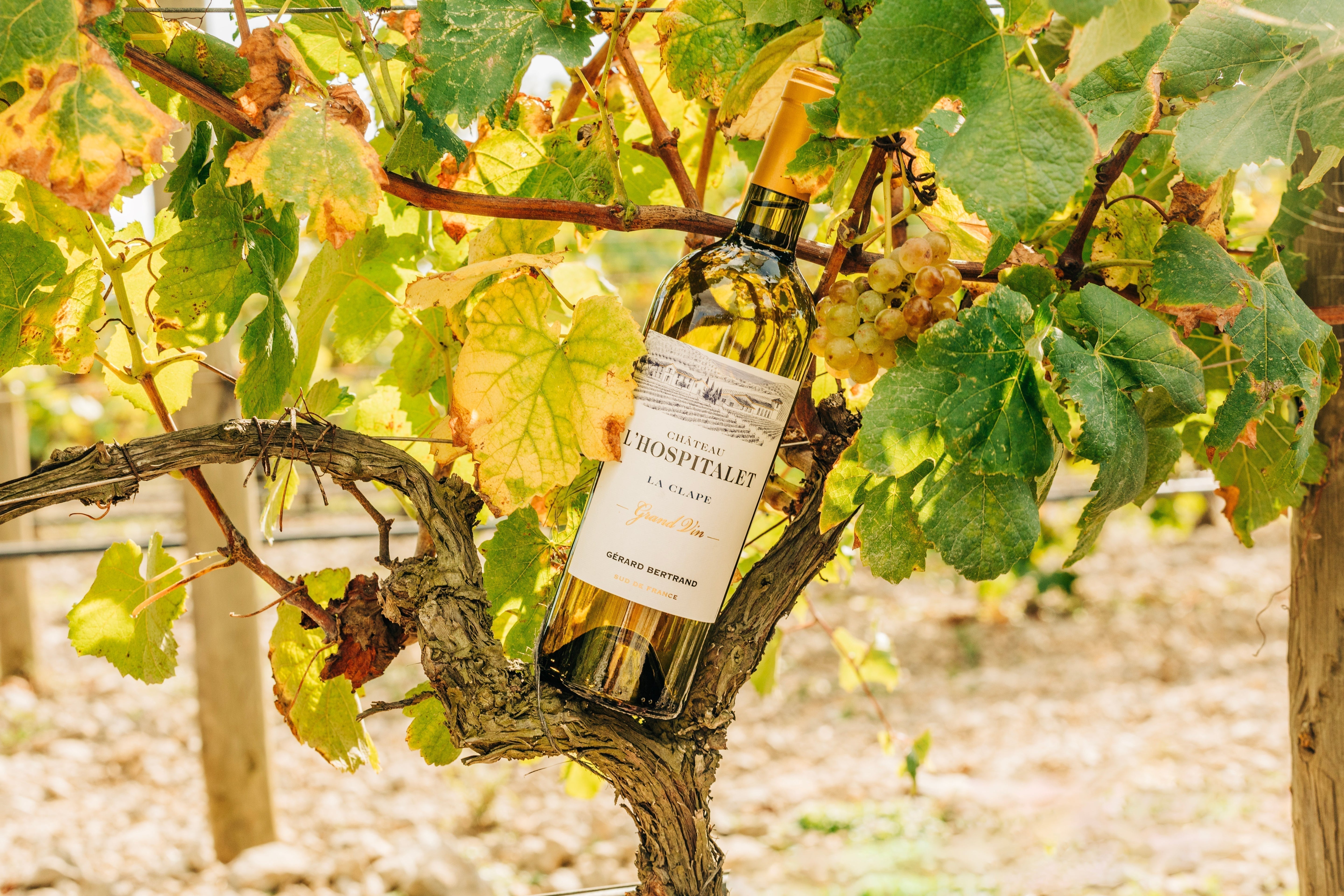
Château l'Hospitalet Grand Vin
Discover a Grand Vin White shaped by the sea, altitude and the minerality of La Clape.
Read the article
Win 2 VIP Tickets for Jon Bon Jovi — Hampton Water Competition
From 30 June to 15 August 2026, try to win 2 VIP tickets to the Jon Bon Jovi concert on 28 August in Edinburgh.
Read the article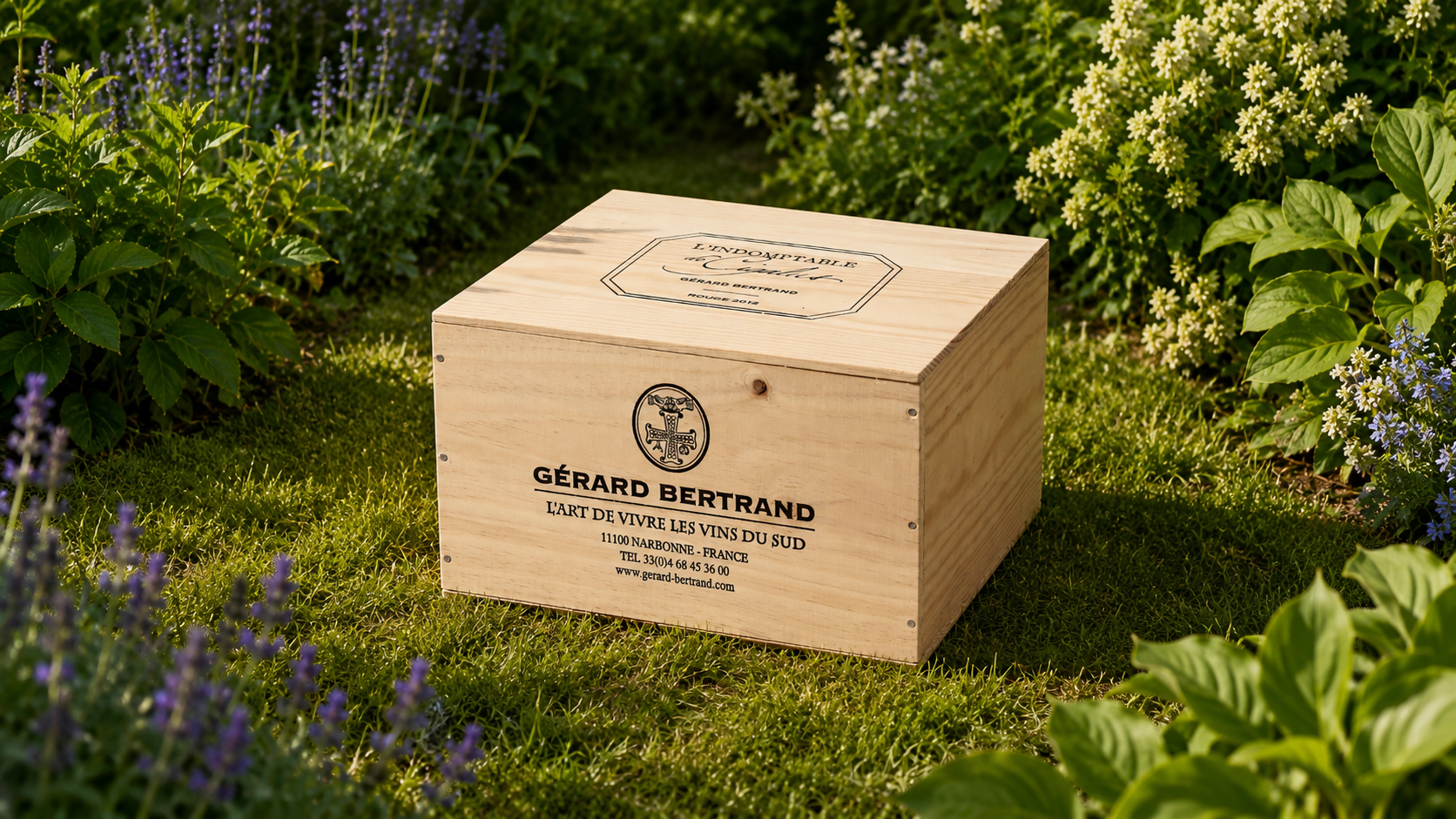
A Second Life for Our Wooden Crates
A fine example of reuse: in Germany, our wooden crates are finding a second life with an association committed to protecting bats.
Read the article